
For homeowners in Arlington, changing seasons means storing away everything, including heavy winter coats and summer linens. However, as these are tucked away in closets, attics, and storage containers, they become vulnerable to indoor pests.
Clothes Moths and Carpet Beetles are two of the most destructive and sneaky home invaders. These pests not only eat dust, but they also feed on organic fibers. These include wool, silk, leather, feathers, and fur. If you have ever pulled out a cherished item only to find tiny holes, you have met these unwelcome guests.
Dealing with such pests requires good precision and targeted control, something that general homeowners struggle with. Do not let these silent destroyers ruin your belongings, and call an Arlington pest control company today for an inspection.
The Web-Spinning Clothes Moth Larvae
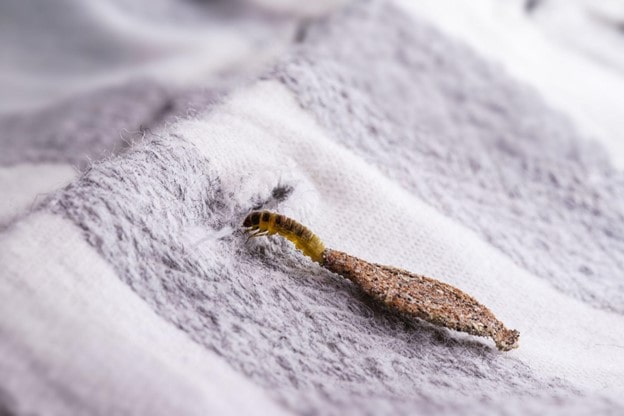
Contrary to popular belief, it is the larvae that cause the damage and not the adult moth. They are creamy white and about 1/2 inch long. These larvae are constantly searching for animal fibers that contain keratin.
Here are some signs of moth damage that you need to be aware of:
- Irregular holes: These appear randomly on fabric, especially wool, cashmere, and silk.
- Silken tubes or cases: The larvae spin silken tubes or “cases” attached to the fabric as they feed.
- Webbing and excrement: Look for fine, silvery webbing or tiny, gritty pellets (excrement) around the damage site.
- Where to check: Focus on items rarely moved, like stored blankets, forgotten sweaters in the back of a closet, or heirloom furs.
The Dust-Loving Carpet Beetles
Carpet beetles are even more common and destructive than clothes moths. The larvae of this pest are fuzzy, brownish, and move slowly. They eat even a larger variety of organic materials, including pet hair, felt, and even spices.
Here are some major signs of carpet beetle damage:
- Grazed patches: Instead of clean holes, carpet beetle larvae tend to “graze” the surface of fabrics. They leave large and thinning patches of surface fiber missing.
- Shed skins: You may find tiny, brownish shed skins in drawers or on carpets.
- Where to check: They often gravitate toward areas that collect dust and hair. Check underneath heavy furniture, along baseboards, and in air ducts, before moving onto fabrics.
Why Is Your Arlington Home The Prime Target?
Arlington’s climate, which is very humid and experiences fluctuating temperatures, creates the perfect conditions for fabric pests. These pests love dark and undisturbed areas.
When the outside temperatures change, the inside of your house remains a stable environment. Your attic or a spare closet provides the perfect breeding ground for them year-round.
Many Arlington homeowners use garages or attics for long-term storage. These are often the first places fabric pests make nests before they move into the main living areas.
More importantly, moths and beetles do not fly into your house. Instead, they enter on contaminated antique furniture, dried flower arrangements, used clothing, and even pet food. This is why it becomes especially challenging to notice them in the house.
Finding A Fabric Pest Solution In Arlington, TX
Since fabric pests target your expensive and sentimental items, you cannot take a risk with them. DIY solutions may look effective on YouTube videos, but they often offer incomplete steps and solutions. Sometimes, you might end up doing more damage.
The pest control products available over the counter may reach the surface areas, but they rarely reach the secluded areas where these pests hide. This is why it is recommended to consult with a skilled team at Romney Pest Control.
They specialize in identifying the exact source and species of the infestation. Through thorough inspection, targeted treatment, and exclusion guidance, they provide comprehensive care.
Do not wait until your vintage jacket or your favorite rug is destroyed. Call Romney Pest Control today!